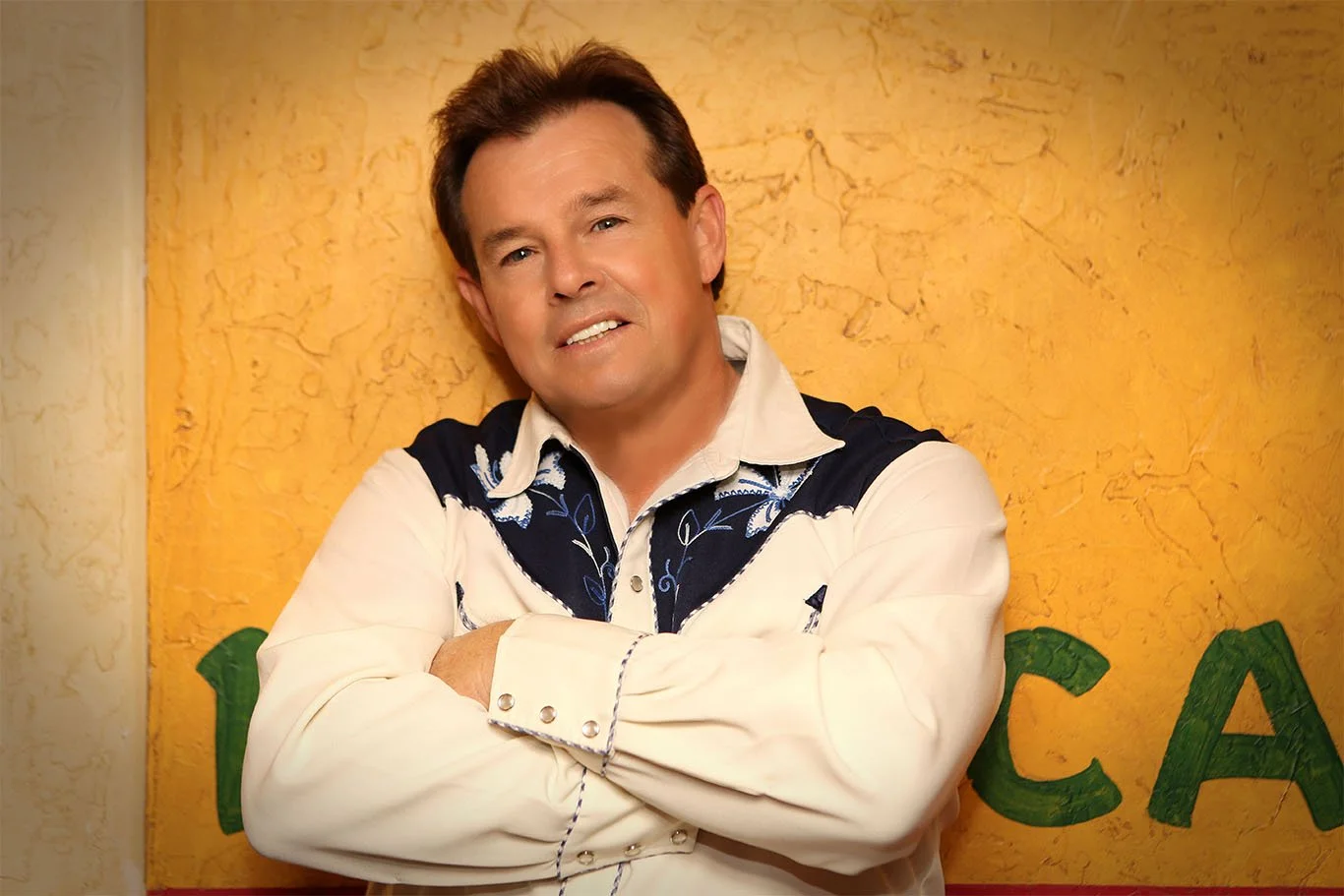
The ’90s country mainstay opens up about forming the Roots & Boots tour and the stories behind his music.
Written by Amanda Tempel
Published: November 12, 2026
It’s a humid August morning in 2022, and in eleven hours, Sammy Kershaw will step into the spotlight to perform in front of thousands of country music fans. While most musicians might be enjoying the air-conditioned comfort of their tour bus or still asleep in a hotel, Sammy is in business-mode at 10 AM. He’s already at the venue, watching as the union crew builds the stage and loads in the equipment for that night’s show.
When I meet up with Sammy that morning, our conversation begins with the radio station where I work. He asks whether we play newer country music, the classics, or something in between.
I tell him we play a mix of everything, including the latest generation of country artists.
Of those newer artists, Sammy says, “I wish them all the luck. I hope they have a career that lasts as long as mine, about 30 years now.”
As we continue talking about country radio, Sammy mentions that he worked as a disc jockey himself around 1982 or 1983. “Yeah, I loved it. I loved radio,” he recalls. “I had fun.”
I tell Sammy that I've always considered “Matches” one of the most underrated country songs of the ’90s. The song appeared on his 1997 album Labor of Love, and its cinematic music video remains one of the most memorable from the days when CMT played music videos around the clock.
Sammy tells me it's one of his personal favorites, too, and recalls how the music video affected the song's radio airplay.
“‘Matches’ is one of my favorite songs that I've recorded in my career. And a little story I can tell you: back when we released that song on the radio, a lot of radio around the country jumped on that record right away. They started playing it a lot. Then a couple of weeks or so later, we put out the video. Some of the radio stations around the country quit playing that record because they said that the video was too violent, which I didn't get that at the time. It's just a sad old country song. Anytime you hear a guy singing a sad country song, it's always the same story. I loved her, she left, but the endings are different. Our ending was she left the matches, so it burnt the place down.”
Sammy has a long history of creative music videos, including the trilogies he's filmed over the years. I bring up one of his newer songs, “My Friend Fred,” and ask him about the story behind it.
“‘My Friend Fred’ - I'll be honest with you, I tried to get that song. It was written two years before I recorded it. The first time I ever went to the studio to do some vocals on some of my albums, both writers were there. One of the co-writers is also my producer and engineer in the studio. He said, ‘Hey, Sam, I'm gonna play you a song that we just wrote the other day.’ And he played ‘My Friend Fred,’ and I was just bawling. I was crying because it hit me so hard. I said, ‘Man, y'all got to let me have that song.’ He said, ‘Somebody's already put it on hold in Nashville.’ And it was a big-name act. They put it on hold, real big. And he said, ‘We can't let you have it, you know, because it's on hold.’ I said, ‘Okay,’ and I kind of forgot about it, really.
“So the next time I went to work in the studio a few months later, I said, ‘Hey, man, play that “My Friend Fred” for me. I just want to hear it.’ He played it. I was crying like a baby. So I left the studio, and one day after I got home, I called him up. I said, ‘Hey, can you email me a track with “My Friend Fred” just for me to have? I won't play it for anybody, I promise you.’ He said, ‘Yeah, I'll send it to you.’ So I got it. I'm sitting there in my living room, and I hit play, and I start crying like a little ol’ baby again, you know.
“I called him up right away. I said, ‘Look, this thing has been on hold for two years. It ain't gonna get cut. Somebody's gonna miss a great song if it's not cut.’ And then all of a sudden he said, ‘Oh hell, go ahead and cut it.’ And they let me cut it. I said, ‘If you let me cut it, I'll have it finished in three days from now, and I'll have the video out in a couple of weeks.’ And sure enough, that's what we did.”
I bring up Sammy's recent appearance onstage with Riley Green and ask if he ever thinks about the influence he's had on the younger generation of country artists.
The people around Sammy seem to recognize his influence on younger artists more than he does himself.
“I don't think about it. I'll say something, and they'll say, ‘You just don't understand, do you? You just don't see it. These guys look at you like you look at George Jones and Merle Haggard.’ And I don't - I can't. I can't imagine that because Jones and Haggard were such - and Hank Senior, Hank Jr. too, I mean, he's a legend - and Tammy and Loretta and all that. I just can't. I just can't seem to put myself in that class. Yeah. I don't think of myself in that class.”
The ’90s gave country music some of its most recognizable voices, including Sammy Kershaw, Aaron Tippin, and Collin Raye. Today, all three share the stage on the Roots & Boots tour. I ask Sammy what it's been like touring with two fellow artists from that era, and he takes me back to how the whole thing started.
“Oh, it's awesome. I started this little thing about 12 years ago, and I can remember when we didn't have any shows left. A lot of us from the '90s were going broke. We didn't have any work.
“I live in southwest Louisiana, and I have a little place in Nashville, so I stay six months, six months. One day, I said, ‘Man, I gotta figure out something to make a living. I'm going broke. I'm going hungry.’
“I woke up one morning and thought, I ought to get two other big '90s country artists and call them up, see if we can't put together a little unplugged thing. So I called my agency, and I was talking to my agent. I said, ‘Who's on the roster there?’ He started naming entertainers, and I said, ‘You know what? If you don't mind, call Aaron Tippin for me and call Joe Diffie. Call them up and ask them if they would be willing to try this.’ And he said, ‘Man, let's try it.’
“I can remember some of the suits in Nashville told me, ‘It'll never work.’ They said, ‘There's no way that three artists are gonna come out on that stage and sit on stools with a guitar behind them playing, and people - 500, 1,500, 5,000 people - are gonna stay there for 90 minutes without leaving.’ And I said, ‘Y'all hide and watch me.’ What they weren't thinking about was that between me and Tippin and Diffie, we had a hundred big hit records.
“And when you only have to do 22, 23 songs out of a hundred, they're not going anywhere.
“So as soon as Aaron would sing one, then I would sing one, then Joe would come back. We'd just keep doing that, and it was just bam, bam, bam, one after another. And when Joe left, I was worried about who we were going to get to fill that slot. I tried out a few people. I had a few guests come. Then they said, ‘Why don't you try Collin Raye?’ And I wasn't real sure about Collin. I wasn't. I've told Collin that many times. But after that first night, when I watched those folks and felt the energy we were having up on stage and the camaraderie thing happening, I knew Collin was gonna be a perfect fit. From then on, it's been us three, and it just don't get no better.
“Just a few years later, we added the full band, which I'd wanted to do from the beginning. That way we can work year-round. You can work your spring and festivals and fairs and all that stuff with a band. When wintertime comes and there's snow everywhere, we do our little three-man unplugged thing, doing theaters. So it's perfect. We work year-round. This is the busiest year I've had since 1993.”
With so much of Sammy's career spent making records that defined ’90s country, I want to know what he's been working on in the studio lately. I ask if there's any new music on the way.
“I have two albums' worth of music already recorded. They're sitting in Muscle Shoals, Alabama. Then COVID hit, and I hadn't been able to record the vocals to get them out. I just signed another little record deal the other day to deliver two new albums by October. So I have four albums I gotta finish by the end of this year.”
I ask Sammy whether he typically records in Muscle Shoals, Alabama, a town with a legendary place in music history.
I normally do my tracks in Nashville, and I always do my vocals in Muscle Shoals. I love it. And so the first two albums are sitting in Muscle Shoals, I had to finish. But then I signed to do two more. One of them is a blues album. ‘Lay Down Sally’ is a song that I did for this tribute album that we did for Eric Clapton. Well, that record label decided they wanted me to do a whole blues album for them. So the producer already cut the music down in Austin, Texas. That album is ready. That's album number three. No vocals yet.
“And in Muscle Shoals, they want me to do a tribute album to Muscle Shoals music. So we got some of that music already recorded in Muscle Shoals. That's album number four, with no vocals on it yet.”
I tell Sammy I'm looking forward to hearing his new music and playing the records on the radio.
More than three decades after his songs first filled country radio, Sammy is still drawing crowds, recording new music, and sharing the stage with the artists who helped define an era. He may never put himself alongside George Jones, Merle Haggard, and the legends he grew up admiring, but his own place in country music history is firmly established.
Earlier in our interview, I referred to him as “the legend Sammy Kershaw.”
“Well, I don't know about that legend stuff,” he told me.
My response was simple.
“I think so.”
This interview has been edited for length and clarity.